
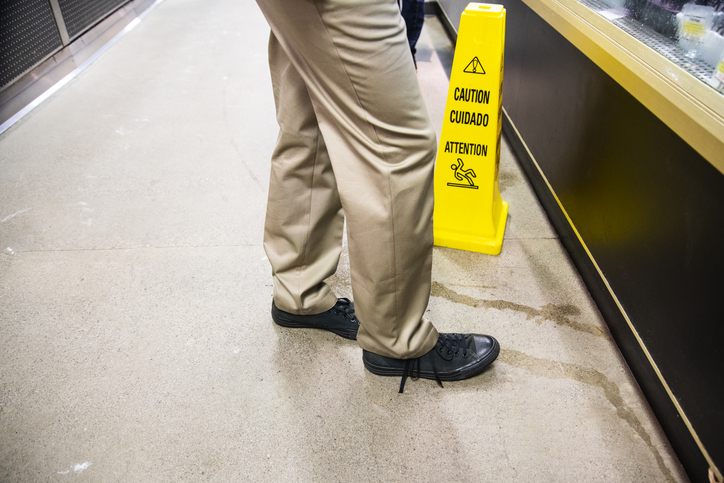
Slip and fall cases are winnable; they just reward preparation more than most injury claims do. Georgia law asks you to prove what the property owner knew about the hazard, and when. That’s a higher bar than a car accident claim usually carries, and injured people clear it regularly when evidence is preserved early and injuries are documented from the first day.
Fox Injury Law handles these claims across metro Georgia. If your fall happened in the Columbus area, our Columbus slip and fall lawyer team can tell you in one free conversation whether your case has the proof problems this article describes, and whether they can still be fixed.
Why are slip and fall cases hard to win?
Because the fall alone proves nothing, slip and fall cases often require more extensive proof of liability than many other negligence claims. A Georgia property owner is liable only for failing to use ordinary care to keep the premises safe. That means you must show the owner knew about the hazardous conditions before you fell, or would have discovered them through reasonable inspection. Wet floors, broken pavement, dim stairwells – none of these win a case by themselves.
Compare a rear-end car accident, where fault usually announces itself at the scene. In slip and fall accidents, fault has to be reconstructed afterward from things like inspection logs or camera footage, and the property owner controls nearly all of it. That asymmetry, more than any legal technicality, is what earns these cases their reputation.
What makes the insurance company push back on a slip and fall claim?
Expect the insurance company to question three things: whether the hazard really existed, whether the owner could have known about it, and whether you share the blame. Adjusters reviewing a slip and fall claim look for gaps, like no photos of the scene or no report on file with the business, because each gap gives them a documented reason to value the claim lower.
Shared fault is the other lever. Your recovery shrinks by your percentage of fault and disappears once you’re 50 percent or more responsible. So an argument that you were looking at your phone, or walked past a visible warning cone, carries real financial weight, and building the record that answers it matters from the start.
What evidence helps you win a slip and fall case?
To win a slip and fall case, you need proof of three things:
- The hazard
- The owner’s knowledge of it
- Your injuries
A lot of that proof disappears fast. Gathering evidence starts at the scene: photos of the spill or defect before it’s cleaned up, the shoes you were wearing, and the area around the fall. Incident reports filed with the business create a dated record that the fall happened where and when you say it did. Witness statements from other customers or employees fill in what the cameras missed. And the cameras themselves matter most of all because many businesses overwrite surveillance footage within days unless someone demands its preservation in writing.
Medical records complete the picture. Consistent follow-up care or imaging that matches the mechanics of a fall ties the injury to the accident in a way an adjuster can’t easily dismiss. Waiting a week to see a doctor invites the argument that something else caused the harm.
How do serious injuries change the case?
Serious slip and fall injuries raise the stakes on both sides. A hip fracture or a traumatic brain injury turns a claim worth thousands into one worth far more, and insurers scrutinize expensive claims harder, not less.
Head injuries deserve particular care: symptoms like memory problems and headaches can surface days after a fall that seemed minor in the moment, which is one more reason early and thorough medical documents protect the case.
Serious injuries can increase the value of a claim when liability is established. A jury understands that a shopper who fractured her hip on an unmarked spill at a grocery store didn’t choose that outcome, and well-documented serious injuries tend to move insurers toward settlement rather than trial.
What can you recover if your case succeeds?
A successful claim covers your financial losses first: medical expenses already billed, the future care your doctors project, lost income, and out-of-pocket expenses like prescriptions, mobility equipment, and travel to appointments. Keep every receipt, because these items are only recoverable when they can be documented.
Compensation then extends to what the injury took beyond money, including pain and suffering, and the loss of activities and independence that came with it. Georgia places no cap on these compensatory damages, and in serious-injury cases they often exceed the medical bills themselves.
How does a personal injury lawyer change the odds?
Mostly by moving early. A personal injury lawyer sends the preservation letter before footage is overwritten, obtains the store’s inspection and cleaning logs through an investigation (or discovery, after a lawsuit is filed), questions the employees who worked that shift, and lines up the medical documentation insurers demand. Most slip and fall lawsuits settle before a jury ever hears them, and the settlements track the strength of the file. Cases with preserved footage and clean medical records resolve on very different terms than cases built on memory alone.
The two-year filing deadline for Georgia injury claims sets the outer limit, but the evidence timeline is far shorter. The practical window for building a strong case is measured in weeks.
Talk with Fox Injury Law about your fall
Fox Injury Law serves metro Georgia’s English and Spanish-speaking communities from offices in Atlanta, Tucker, and Columbus, with 30 years of combined experience between founding partners Melody Fox and Chris Fox. Consultations are free, and we work on a contingency fee basis, so you pay no attorney’s fees unless compensation is recovered.
Call (404) 777-7778 or contact us online, and we’ll tell you honestly how winnable your case looks.

